

Quick answer
An emergency contact is the person you want called if you are hurt or taken ill and cannot speak for yourself. Save them in your phone, add them to your phone’s lock screen so they can be seen without unlocking it, and carry their details in writing. An emergency contact has limits, though: someone has to find your phone first, and a phone number tells responders nothing about your health. That is why your Health information matters just as much.
If you were found unconscious tomorrow, would the person who found you know who to call? Would the paramedics know about your allergy, your heart condition or the medicine you take every morning?
Setting up an emergency contact answers the first question. This guide explains how to do it properly, where it falls short, and what else you can do to make sure the right information reaches the right people.
What is an emergency contact?
An emergency contact is a person you choose to be told if something happens to you. Usually it is a partner, a parent or a close friend: someone who will answer, and who knows enough about you to help.
You may have heard it called an ICE contact, short for In Case of Emergency. The idea began in the UK in May 2005, when Bob Brotchie, a paramedic with the East of England Ambulance Service, encouraged people to save their emergency contact in their phone under “ICE”. It followed research by Vodafone which found that fewer than a quarter of people carried any details of who should be called after a serious accident.
How to set up an emergency contact on your phone
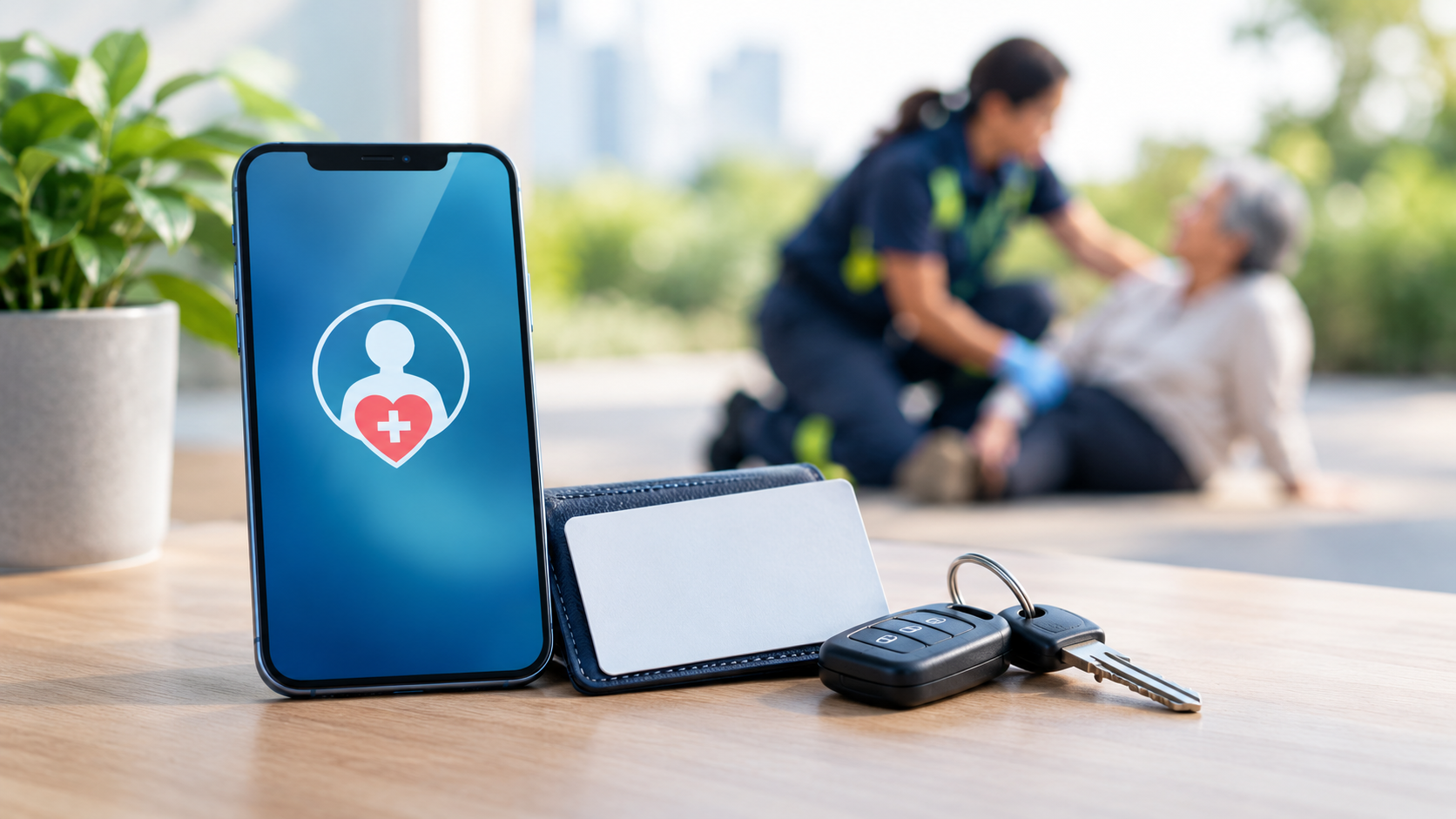
- Add your emergency details to your lock screen. This is the most important step. On an iPhone, you can do this in the Health app and turn on the option to show it when the phone is locked. On Android, look for
- Emergency information in your settings. Anyone helping you can then see your emergency contact without unlocking your phone.
- Save your contact in your address book with a clear label, for example “Emergency Mum” or “ICE Mum”. If you have more than one, number them in the order they should be called.
- Choose people who are likely to answer and who know your health history.
Tell them. Make sure they know they are your emergency contact, and that they know about any condition, medicine or allergy you have. - Carry a written card. A card in your wallet or purse with your emergency contact and key health details works even when your phone does not.
Where an emergency contact falls short
An emergency contact is a good start, but in a real emergency it has four weak points.
1. A locked phone can hide it
Most phones are locked with a code, a fingerprint or face recognition. If your emergency contact is only in your address book, a responder may not be able to reach it at all. Lock-screen details solve this, but only if you have set them up.
2. Someone has to find your phone
An emergency contact only helps once someone is with you. If you fall while out walking or running alone, or collapse at home, nobody is there to look at your phone in the first place.
3. A phone number is not health information
Your emergency contact can tell responders who you are. They may not know which medicines you take, the exact name of your condition, or your blood group, and in a stressful moment they may not answer their phone at all.
4. It does not call for help
An emergency contact waits to be found. It cannot raise the alarm for you if you cannot do it yourself.
Emergency contact, lock-screen details and Z-KUR compared
What it does | Emergency contact in your address book | Lock-screen emergency details | Z-KUR |
|---|---|---|---|
Tells responders who to call | Yes, if the phone is unlocked | Yes | Yes |
Shares your Health information | No | Yes, on screen | Yes, with the emergency services through a secure route |
Works if nobody is with you | No | No | Yes, it can detect a fall or accident |
Raises the alarm for you | No | No | Yes, after a trained Kurator checks the alert |
The point is not to choose one. Each layer covers a gap the others leave open.
What Z-KUR adds
The Z-KUR personal safety app was designed by three doctors to close the gaps an emergency contact leaves.
- Your Health information is ready when it is needed. You add your conditions, medicines and allergies once. If an alert is confirmed, the emergency services receive the information they need through a direct, secure route.
- It can raise the alarm when you cannot. Z-KUR can detect a fall or accident using your phone’s sensors. In manikin testing, its algorithms detected 97% of incidents.
- A trained person checks every alert. Every detection is reviewed by a trained Kurator before anything reaches the emergency services. Across more than 30,000 hours of recording, zero false alerts have been passed on.
- Trained help nearby. Z-KUR builds a network of trained bystanders, our First Aid Users, around you.
Z-KUR is live with 999 across England, Scotland, Wales and Northern Ireland, and with 112 in Ireland. You can read more about how Z-KUR works.
Who needs more than an emergency contact?
Everyone should have an emergency contact. These groups have the most to gain from adding more:
- People who exercise alone, especially now the evenings are dark. Our checklist for running at night covers the rest of your preparation.
- People with a health condition, such as diabetes, epilepsy, a heart condition or a severe allergy, where the first treatment depends on knowing about it.
- Older people who live alone, where a fall at home may go unnoticed for hours.
Drivers. We explain why health information matters after a car accident, when you may not be able to speak for yourself. - Anyone travelling abroad, where language can make it harder to explain your condition.
Frequently asked questions
What is an emergency contact?
An emergency contact is the person you want called if you are hurt or taken ill and cannot speak for yourself. It is usually a partner, parent or close friend.
What does ICE mean on a phone?
ICE stands for In Case of Emergency. It is a label some people put in front of their emergency contact’s name, such as “ICE Mum”, so responders can find it quickly.
Can someone see my emergency contact if my phone is locked?
Only if you have added emergency details to your lock screen. A contact saved in your address book alone stays hidden behind the lock.
Do paramedics check phones for emergency contacts?
They may, but you should not rely on it. Responders focus on treating you first, and a locked or damaged phone may stop them reaching your contacts. Lock-screen details and a written card are more dependable.
Who can see my Health information in Z-KUR?
The trained Kurator handling your alert can see it, so they can pass the right details on. When an alert is confirmed, the emergency services receive it through a secure route. Our privacy policy explains how your information is protected.
Take five minutes today
Set up your emergency contact, add your emergency details to your lock screen, and write a card for your wallet. Then add the layer that works when nobody is there to find your phone. Download Z-KUR and add your Health information today.
Z-KUR does not replace calling the emergency services. If you are able to call 999 or 112, always do so.