

Quick answer
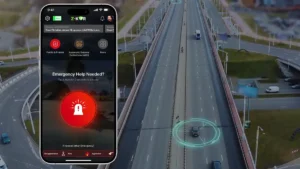
If you fall off your horse while riding alone, the first minutes matter most. Do not jump straight up. Stay still, check yourself for injury, and call 999 if you are hurt, especially if you have pain in your neck or back, a headache, or you feel confused. If you cannot call, an app such as Z-KUR can detect the fall, and a trained operator will alert 999 with your exact location, even if you cannot speak.
Every horse owner knows the moment. The yard has gone quiet, the light is fading and someone you love is still out alone.
Almost every time, it ends with nothing serious to report. But when a fall happens with nobody around, the first minutes decide a great deal.
Dr Philippe Koch, one of the three doctors behind Z-KUR, is an emergency physician whose wife rides alone most days. This guide, reviewed by Dr Koch, explains what happens to the body in the minutes after a fall, what to do if it happens to you or if you find another rider on the ground, and the simple habits that shorten the wait for help.
How often do riders fall?
More often than most of us like to admit. The research tells a consistent story:
- In a UK survey of nearly 2,000 riders, 53% reported at least one fall in 12 months, and one fall in four happened out hacking (Marlin and Williams, Comparative Exercise Physiology, n = 1,977).
- Hour for hour, riding injures more people than motorcycling: 0.49 injuries per 1,000 hours in the saddle, against 0.14 on a motorbike (Trauma Surgery and Acute Care Open, 2021, US data).
- Riding accounts for 45% of adult sports-related brain injuries treated in US trauma centres, more than any other sport (Winkler et al., Neurosurgical Focus, 2016).
- More than a third of riders were alone the last time they rode (University of Kentucky rider survey).
“The statistics tell us how often we fall,” says Dr Koch. “What decides the outcome is how long you wait for help.”
Why the first minutes after a fall matter
In emergency medicine, the first hour after a serious injury shapes the outcome. Bleeding, a head injury or a blocked airway all get worse with time, and the treatment that makes the biggest difference is the one that starts soonest.
With a fall out hacking, that hour can disappear quickly if no one knows you need help. A concussed rider may not know where they are. An unconscious rider cannot dial 999. A rider with a back injury should not try to walk home, even if they feel able to.
Winter adds a risk of its own. “Lying still on cold, wet ground, an injured rider loses body heat fast, and the cold makes any injury worse,” says Dr Koch. “In winter, the cold becomes part of the injury.”
The fall no one sees: riding alone and hacking
Most falls happen with other people nearby: in the arena, at a lesson or at a show. The fall that worries doctors is the one on an empty bridleway, early in the morning or as the light goes, when nobody knows exactly where you are.
Riders often rely on the horse to raise the alarm. A loose horse arriving back at the yard tells people something is wrong, but it does not tell them where you are or how badly you are hurt, and it may be a long time before it gets home. “The horse coming home alone should not be the alarm system,” says Dr Koch.
If you fall when you are alone: what to do
- Do not jump straight up. Adrenaline can hide pain. Stay where you are for a moment and take a few breaths.
- Check yourself before you move. If you have pain in your neck or back, numbness, tingling or weakness in your arms or legs, stay still and call 999.
- Treat a head injury seriously. A headache, feeling dazed or sick, blurred vision or not remembering the fall are all warning signs. Call for help and do not get back on.
- Call for help early. Ring 999 if you are hurt. If you are not sure exactly where you are, apps such as what3words can help you give an accurate location.
- Keep warm. If you have to wait, use whatever you have to keep off cold, wet ground and stay covered.
- If in doubt, sit it out. UK concussion guidance for grassroots sport says anyone with a suspected concussion should stop straight away, should not return to sport for at least 24 hours, and should contact NHS 111 within 24 hours for advice.
If you find a rider on the ground: what to do
- Make the scene safe first. Look out for traffic and for the horse. Catch a loose horse only if you can do it safely, as a frightened horse near an injured person is a risk to both of you.
- Do not move them, and do not tell them to move, unless they are in immediate danger. Support their head so their head, neck and spine stay in line.
- Leave their hat on unless it is interfering with their breathing.
- Call 999 and give an exact location. If the rider is not responding and not breathing normally, the call handler will talk you through CPR.
- Keep them warm and stay with them until help arrives, and keep talking to them if they are conscious.
Five things every rider can do before riding out
- Tell someone your route and when you expect to be back, every time.
- Wear your hat, properly fitted and fastened, on every ride.
- Carry your phone on your body, not on the saddle. A phone in a saddle bag rides home with the horse.
- Keep your health information up to date and reachable by the people treating you. An unconscious diabetic rider, or one on blood thinners, is at greater risk if nobody knows about the condition.
- Use technology that raises the alarm when you can’t.
How Z-KUR raises the alarm when you can't
Z-KUR was designed by three doctors who, after years in medicine, knew how much the first minutes after a fall can change an outcome. It runs on the phone already in your pocket, with nothing to press and nothing to wear.
- Your phone detects a hard fall automatically. In manikin testing, our algorithms detected 97% of incidents.
- A trained operator, called a Kurator, calls you to check you are all right. If it was nothing, you ride on.
- If you do not answer, or it is a real emergency, 999 is called. The emergency services receive your exact location, who you are and the health information that matters for this emergency, even if you cannot speak. Two nearby Z-KUR First Aid Users (FAUs) are asked to come and make the scene safe until help arrives.
- Your family and friends are kept informed throughout. Adding them as contacts is free.
A sensor cannot tell whether a person is conscious. That is why every alert is checked by a trained operator before anything reaches the emergency services. Z-KUR is live with 999 across the UK and 112 in Ireland. It works alongside your insurance and a well-fitted hat, never instead of them.
Meet Dr Koch at Your Horse Live |
|---|
Come and meet the doctors who built Z-KUR on stand M804, in the Marquee at Your Horse Live, NAEC Stoneleigh, 6 to 8 November 2026. Your first month is free, then £15 a year in the UK (€20 in Ireland), locked for your first year. |
Frequently Asked Questions
What should I do straight after falling off a horse?
Stay still for a moment and check yourself before you try to get up. If you have pain in your neck or back, numbness, a headache or you feel confused, stay where you are and call 999.
Should I get back on after a fall?
Only if you are completely sure you are unhurt. If there is any chance of a head injury, do not ride again that day. UK guidance says anyone with a suspected concussion should not return to sport for at least 24 hours and should contact NHS 111 for advice.
Should you take off a rider's hat after a fall?
No. Leave the hat on unless it is interfering with their breathing, and do not move them unless they are in immediate danger.
Is it safe to ride alone?
Many riders hack alone every week. You can make it much safer by telling someone your route and return time, carrying your phone on your body and using an app that can raise the alarm if you cannot.
Does Z-KUR work if I am unconscious?
Yes. If you cannot answer the phone or the operator’s call, the trained operator treats it as an emergency and alerts 999 with your exact location and the health information that matters.
What if Z-KUR detects a fall and I am fine?
Your phone asks you to confirm. If you say you are fine, or the operator reaches you and you are fine, nothing goes further. To date, not a single false alert has been passed to the emergency services.
Find out more about Z-KUR for horse riders
This article is general information and is not a substitute for medical advice. In an emergency, always call 999 (UK) or 112 (Ireland).