

Every day, thousands of road accidents happen across the UK and around the world. While most people think about seatbelts, airbags, and vehicle safety, there is another risk that often goes unnoticed: what happens if you survive an accident but cannot communicate?
Imagine being unconscious, disoriented, or unable to speak after a crash. First responders arrive quickly, but they have no immediate way of knowing your medical history, allergies, medications, or who to contact. In those critical moments, missing information can delay care and leave loved ones unaware of what has happened.
This is why emergency information has become an essential part of personal safety. Storing important details in an accessible and secure format can help emergency responders make informed decisions when every second matters.
The First Few Minutes After a Car Accident Matter Most
After a car accident, the first few minutes are often the most important. Emergency services focus on assessing injuries, stabilising patients, and determining the best course of treatment.
However, when a person cannot speak for themselves, responders may be missing crucial details, such as:
- Existing medical conditions
- Allergies to medications
- Current prescriptions
- Emergency contact information
- Blood type
- Special medical requirements
Without this information, healthcare professionals may have to make decisions with limited knowledge, which can slow down treatment or increase risks.
Having emergency medical information readily available can make a significant difference during these situations.
Why Communication Matters During Emergencies
Communication is one of the most valuable tools during an emergency. A patient who can explain symptoms, provide medical history, and identify emergency contacts helps responders act faster and more accurately.
But accidents do not always allow for that.
A person may be:
- Unconscious
- Suffering from shock
- Experiencing confusion or memory loss
- Unable to speak because of injuries
- Separated from family members
When this happens, emergency responders rely on any available information to provide the right care.
This is where a digital emergency profile or medical ID can become invaluable.
What Information Do First Responders Need Immediately?
First responders often need access to critical information before treatment begins.
Personal Identification
Basic identification helps confirm who the patient is and notify the appropriate people.
Important details include:
- Full name
- Date of birth
- Address
- Emergency contacts
- Next of kin information
Medical History
Medical history can directly affect treatment decisions.
- Key information may include:
- Chronic conditions such as diabetes or epilepsy
- Heart conditions
- Asthma
- Previous surgeries
- Mobility limitations
Allergies and Medications
Medication allergies can be life-threatening if they are not identified quickly
A medical profile should include:
- Drug allergies
- Food allergies
- Current medications
- Dosages when appropriate
This information can be critical during an emergency because treatment decisions often need to be made quickly.
Some studies suggest that up to 80% of deaths caused by severe allergic reactions occurred in people with previously known allergies, meaning many of these tragedies may have been avoidable if allergy information had been properly recorded and readily available during the emergency.
When a person is unconscious or unable to speak after an accident, having allergy information stored in an accessible digital medical profile may make a significant difference in the care they receive. Access to known allergies can help emergency responders avoid potentially dangerous medications, make safer treatment decisions, and communicate critical information to hospital teams more quickly.
Blood Type and Special Instructions
Although hospitals conduct testing, having blood type and important medical instructions available can provide useful context during emergencies.
The Hidden Impact on Families
When someone is involved in an accident, the effects extend beyond the injured person.
Family members often face:
- Delayed notifications
- Uncertainty about their loved one’s condition
- Difficulty communicating with healthcare providers
- Emotional stress during critical moments
If emergency contacts cannot be identified quickly, valuable time may be lost before loved ones are informed.
For parents, partners, and caregivers, this uncertainty can be overwhelming.
Preparing emergency information in advance not only protects you but also helps protect the people who care about you.
Why Storing Medical Information on Your Phone Matters
Today, smartphones have become more than communication devices.
They can also serve as powerful safety tools.
Many people already carry their phones everywhere they go, making them an ideal place to store emergency medical information.
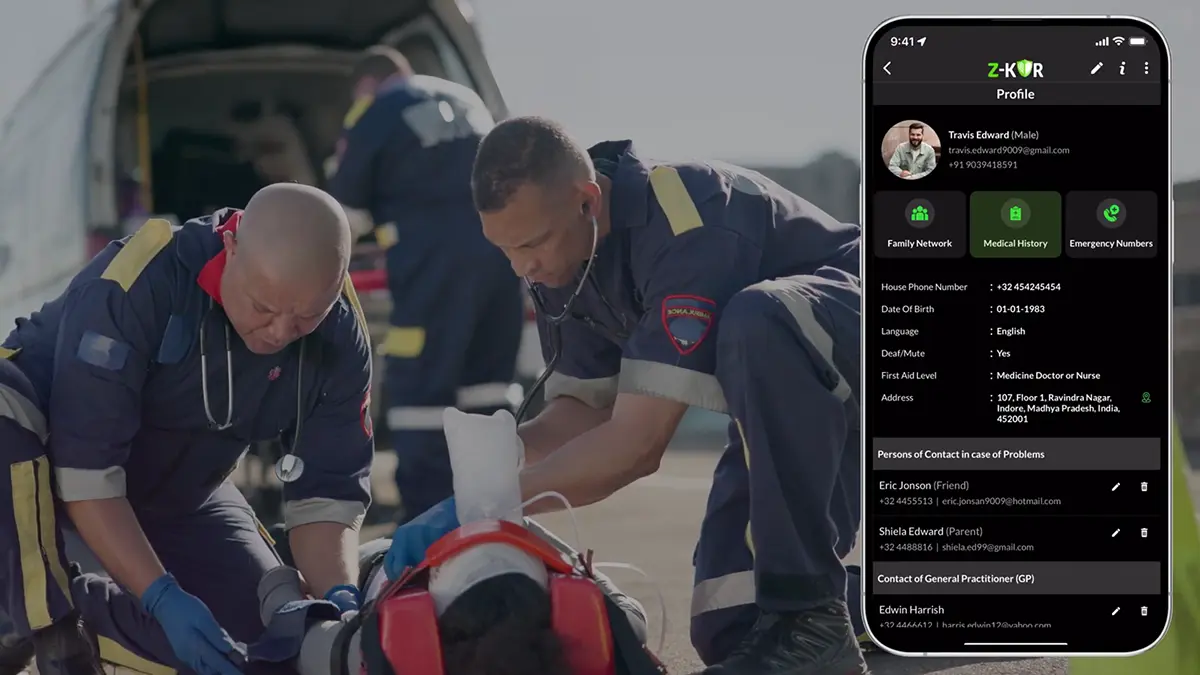
A digital medical profile may include:
- Medical conditions
- Allergies
- Medications
- Emergency contacts
- Healthcare provider details
- Important notes for responders
For individuals with severe allergies, carrying this information can be particularly important. Emergency responders may need to administer medications quickly, and knowing about existing allergies can help avoid potentially dangerous treatment complications.
Having medical information on a phone can help ensure critical details are available when they are needed most.
Can First Responders Access Emergency Information on a Locked Phone?
Many modern smartphones offer emergency access features that allow certain information to be viewed without unlocking the device.
For example:
- Medical IDs can be accessed from the lock screen on some devices.
- Emergency contacts may be available to first responders.
- Certain emergency apps provide quick access to critical details.
However, features vary between devices and operating systems, which is why users should regularly review and update their emergency settings.
The goal is simple: make important information easy to find during an emergency.
How Digital Emergency Profiles Improve Emergency Response
Traditional paper records are not always practical during accidents.
Digital emergency profiles provide several advantages.
Faster Access to Information
Critical details can be viewed quickly when time matters most.
Improved Communication
Emergency responders can identify family members and contacts faster.
Better Medical Decisions
Knowledge of allergies, medications, and medical conditions may help guide treatment and reduce the risk of complications.
Greater Peace of Mind
Users know their information is available even if they cannot communicate.
In emergency situations, preparedness can help reduce uncertainty and improve outcomes.
Protecting Your Loved Ones Starts Before an Emergency Happens
Many people assume emergencies happen to someone else until they experience one themselves.
Preparing emergency information in advance is not about expecting the worst. It is about making sure the right people have the right information when it matters most.
Simple steps can include:
- Creating a medical ID on your smartphone
- Adding emergency contacts
- Updating medical information regularly
- Using emergency preparedness apps
- Informing family members about your emergency plan
Small actions today can make a significant difference tomorrow.
How Z-KUR Helps You Prepare for Emergencies
Personal safety technology continues to evolve, giving people more ways to protect themselves and their families.
Z-KUR is designed to support emergency preparedness by helping users keep important information accessible when it matters most.
Features may help users:
- Store emergency information
- Maintain medical profiles
- Share critical details quickly
- Keep emergency contacts accessible
- Improve communication during emergencies
When accidents happen unexpectedly, having essential information available can help both emergency responders and loved ones act faster.
Final Thoughts
The hidden danger after a car accident is not always the crash itself. Sometimes, it is the silence that follows when a person cannot speak for themselves.
Emergency responders work quickly, but they can only act on the information available to them. Without access to medical history, emergency contacts, allergies, medications, or other critical health details, valuable time may be lost.
Something as simple as a known allergy, an emergency contact, or a list of medications may provide emergency teams with information that directly influences treatment decisions and could potentially save lives. In many cases, the information already exists; the challenge is making sure it is available when the person who needs help can no longer speak for themselves.
Taking a few minutes to organise your emergency information today could help protect your health, support first responders, and give your family peace of mind during difficult moments.
Because in an emergency, information can be just as important as treatment.
FAQs
What emergency information should I store on my phone?
You should consider storing emergency contacts, medical conditions, allergies, medications, blood type, and other important health information that may help first responders.
Can paramedics access emergency information on a locked phone?
Many smartphones offer emergency access features that allow certain information to be viewed from the lock screen, though capabilities vary by device.
What is an ICE contact?
ICE stands for “In Case of Emergency.” An ICE contact is a trusted person emergency responders can contact if you are unable to communicate.
Why is medical history important during emergencies?
Medical history helps healthcare professionals make informed treatment decisions and avoid complications caused by allergies, medications, or existing conditions.
How can emergency apps help after a car accident?
Emergency apps can provide access to medical information, emergency contacts, and safety features that help improve communication and response during emergencies.