


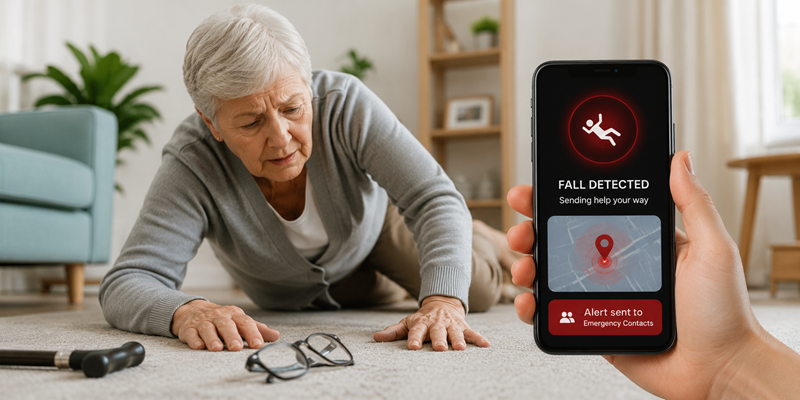
Growing older should never mean giving up independence. Many older adults across the UK continue living active lives, enjoying time with family, shopping independently, travelling locally, and maintaining daily routines. But with age comes a greater risk of falls, medical emergencies, and situations where immediate help may be needed.
For years, the common solution has been a personal alarm elderly UK device. While these alarms have provided reassurance for many families, technology has moved forward. Today, fall detection apps offer a smarter and more responsive way to improve personal safety.
The difference is simple: alarms often rely on someone pressing a button. Fall detection apps can recognize emergencies automatically and respond when a person may be unable to call for help themselves.
The Problem With Traditional Personal Alarms
Personal alarms have long been used by elderly individuals who live alone or may need additional support. Typically, these systems include a wearable pendant or button that contacts family members or emergency services.
While helpful, they have limitations:
- The person must be conscious and able to press the alarm
- Wearable devices can be forgotten or left in another room
- Some users stop wearing them because they feel uncomfortable
- Emergencies can happen too quickly to react
A fall can leave someone injured, disoriented, or unable to move. In these situations, depending entirely on a manual alarm may not provide the protection people expect.
Why Falls Are More Serious Than Many People Realise
Falls are among the most common causes of injury in older adults. Even a simple fall can lead to complications including:
- Fractures
- Head injuries
- Reduced mobility
- Loss of confidence
- Long recovery periods
Many older people also experience what’s known as “long lie” incidents, where they remain on the floor for extended periods because they cannot reach help.
The faster assistance arrives, the better the chances of reducing complications and improving outcomes.
How Fall Detection Apps Work
Modern fall detection apps use smartphone sensors and intelligent technology to identify unusual movement patterns that may indicate a fall.
Rather than relying only on a panic button, these apps can:
- Detect sudden impacts
- Monitor movement changes
- Send alerts automatically to surrounding users from the vicinity
- Share live location details
- Notify emergency contacts quickly
This creates a stronger safety net, particularly for elderly individuals who spend time alone.
Instead of waiting for someone to ask for help, the technology can act immediately.
More Than Emergency Response
A good fall detection app does more than react after an accident.
Many safety apps now include:
- Emergency SOS features
- Live location sharing
- Quick contact access
- Check-in functions
- Safety notifications for family members
These tools help older adults stay independent while giving loved ones peace of mind.
Families often worry when elderly relatives live alone or travel independently. Real-time safety features can help reduce anxiety without feeling intrusive.
Supporting Independence Instead of Limiting It
One concern older adults sometimes have is feeling monitored or losing freedom.
The goal of modern safety technology is the opposite.
A fall detection app supports independent living by allowing people to continue everyday activities with additional protection in place.
Whether someone is:
- Walking locally
- Visiting friends
- Shopping
- Travelling alone
- Living independently
having quick access to support creates confidence.
Safety should empower people rather than restrict them.
Why Smartphones Make Safety Easier
Unlike traditional alarm devices, smartphones are already part of daily life.
Most people carry them:
- At home
- During walks
- On public transport
- While travelling
- During appointments
This means protection stays nearby without requiring an extra device or wearable alarm.
For many users, smartphone-based safety solutions feel more natural and convenient.
Final Thoughts
Traditional alarm systems still have value, but technology now offers more comprehensive protection. A personal alarm elderly UK device can help in emergencies, but automatic fall detection adds another important layer of safety.
For older adults wanting to maintain independence and families looking for greater reassurance, modern safety apps can provide faster support when it matters most.
Take proactive steps toward safer independent living and stronger peace of mind.